Climate related Energy Risk in Huntington, WV
Risk Identification
Energy risks refer to the volatilities in the production, consumption and distribution of energy. Huntington, West Virginia, faces a variety of energy risks that can be directly linked to climate change events. There are two gas-fired power stations that supply energy to Huntington, Ceredo Generating Station and Big Sandy Peaker Plant, which are both owned by Appalachian Power (APCo), a subsidiary of American Electric Power (AEP).
- Extreme weather events: an extreme weather even like a hurricane could affect the City’s power supply. This would leave residents without power for extended periods of time.
- Increased electricity billing: For utility providers, responding to climatological events and laws is an expensive process. If such a cost is not well managed by APCo then this could reflect in the electrical bill of end users.
- Increased electrical consumption: There is a link between weather patterns and the overall electrical consumption patterns of humans. Weather highs and lows bring an increased desire for heating or cooling, which in turn effects both supply and demand of electricity (U.S Energy Information Administration, 2023). A change in Huntington’s weather could increases electricity usage.
Risk Analysis
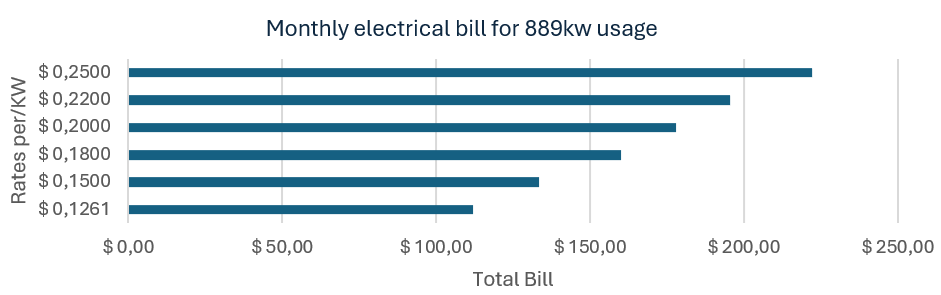
Huntington is not as prone to hurricanes as other places in America, however hurricane Sandy in 2012, toppled plenty of forestry (A lot of Huntington’s electrical infrastructure runs alongside dense forests) leaving millions of West Virginians without power. West Virginia Utility companies have spent near a billion dollars between 2012-2021 on the repairs and improvement of electrical infrastructure to prevent power interruptions linked to Hurricane Sandy (Hampton, 2021). The prolonged power outages during this time exposed the unpreparedness of APCo to handle a high severity low frequency risk; “These kinds of events …. become much easier to deal with once you have them if you build an interstate highway of transmission around the country,” said James McCalley, professor of electrical and computer engineering at Iowa State University. APCo has made use of revenue generation in response to this, as continual increases in billing have seen the energy rate increase by 35% since just 2021(Ledonne, 2024) and according to The Public Service Commission of West Virgina’s 2020 report APCo plans further increases. The current electricity rate in West Virginia is 12.61c per kW (EnergyBot, 2024), this is below national averages but must be looked at relative to the citizens of Huntington.
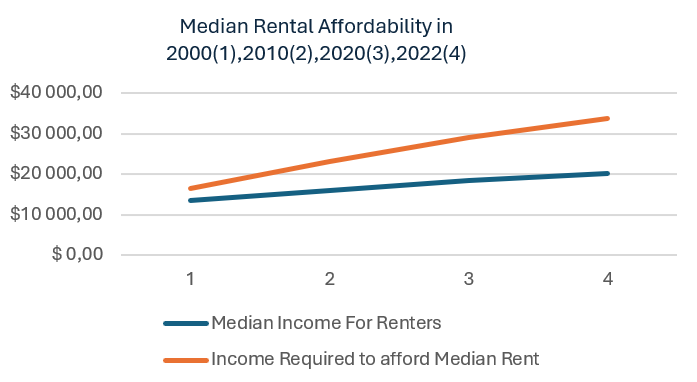
On page 17 the city’s Plan2035 ( see figure 3.1) housing is already unaffordable for renters in Huntington, with most paying over 30% of income on housing. The 2022 U.S household monthly average electricity consumption was 889Kw (U.S Energy Information Administration, 2023). According to the above presented information, the fair assumption is that a renter in Huntington spends on average about 112.10$ on electricity a month compared to 83.03$ just three years ago. This increased price coupled with the potential for an increased consumption of electricity due to Huntington’s increasing temperatures (see the figure 2.1) leave the citizens of Huntington exposed to a serious energy risk, with the most vulnerable being lower income households including students at Marshall University.
Figure 3.1
Figure 3.2
Risk Evaluation
Hurricanes are not a significant factor of Huntington’s climate, but it is still advisable to protect against such events, as the past has proven that hurricanes are indeed a possibility, and their consequences are harsh on service provision. The more concrete perils are the increasing temperatures (figure 2.1) and unaffordability.
Risk Treatment
- Interregional transmission: This is the transfer of large quantities of electricity between different geographical locations. This mitigation strategy can be implemented by APCo as it has proven to not only cut coast but also be effective in time of catastrophic event. Take this study, National Transmission Planning Study by the U.S. Department of Energy (DOE) which looks at strategic transmission solutions to improve the reliability, resilience, and efficiency of the electrical grid.
- Hedging against energy price: The signing of a futures contracts that reduce overall risk of loss with methods such as agreeing to purchase energy at a set amount from a third party for a specified period irrespective of the market price.
- Parametric Insurance: This is insurance coverage based on predefined conditions (parameters) rather than actual losses incurred. This is easier than having to prove loss, as payouts can be triggered by specific weather events. APCo could take such a coverage against extreme weather events. (See infrastructure risk treatment for detailed implementation of parametric insurance coverage)
- Mirco Griding: This is the use of local energy systems that can work independent of or in conjunction with the electrical grid therefore increasing energy security (Tambe, 2023). It is a costly solution but the city could request to becoming a beneficiary of programmes like the Solar for all EPA Programme, which has invested $7billion aimed at the provision of inexpensive clean energy for lower income households