Climate Liability Risk in Huntington, WV
Risk Identification
Climate liability risk refers to the potential for organizations, including municipal councils like Huntington, West Virginia, to face lawsuits related to their contributions toward climate change and the resulting damages thereof, for failing to adapt their practices in line with international scientific consensus regarding climate. (McGrath, 2024). Climate lawsuits can be under the following classes
Administrative Case: These lawsuits are directed at governments or public bodies for failing to mitigate climate change or adapt to its associated risks (Brook,2019). The failure of Huntington’s aging stormwater systems and flood control infrastructure has led to property damage, which affects both ecosystems and humans. As climate change exacerbates the severity and frequency of flooding, property owners may pursue legal action against the city for failing to implement adequate flood prevention measures, potentially resulting in substantial financial liabilities that strain Huntington’s budget. Additionally, the city could face lawsuits for approving developments in flood-prone areas without proper risk assessments.
- Floodplain Management: This is any strategy that aims at reducing the risk or impacts of areas prone to flooding. According to Huntington’s website 400 properties are in the floodplains of the Ohio River. Mismanagement of these areas could leave Huntington Responsible for these properties.
- The Clean Air Act: Passed in 1963, is a federal law that empowers the U.S. Environmental Protection Agency (EPA) to regulate air emissions and improve air quality nationwide. It also assigns cities and local governments responsibilities for enforcing air quality standards. Negligent enforcement of air pollution laws could increase the likelihood of lawsuit in this regard.
Tortious Claims: These lawsuits alleging that a corporation’s actions have significantly contributed to climate change (Mishara, 2022). These include public nuisance, which asserts that corporations’ emissions have harmed communities or the environment; product liability, claiming that companies failed to warn consumers about the dangers of their products, such as fossil fuels; and negligence, alleging a failure to act responsibly in limiting emissions or mitigating known climate risks (Brook,2019). These legal actions aim to hold corporations accountable for their role in exacerbating climate-related harm.
In Huntington, tortious claims related to climate liability could arise if entities within the city are perceived as contributing to climate change or failing to address its impacts. For instance, public nuisance claims could target the city if emissions from industrial facilities or transportation hubs, such as the Port of Huntington Tri-State, are alleged to exacerbate flooding risks and harm local communities or the environment (Baker, 2024). Similarly, product liability claims might emerge if municipal agencies or local businesses promote fossil fuel-based energy systems or transportation without adequately warning about their environmental consequences, thereby failing to disclose the long-term risks associated with such products (Spier, 2018). Additionally, negligence claims could be brought against the city if it fails to act responsibly in mitigating known climate risks, i.e neglecting to upgrade flood management systems despite increasing flooding risks or not adopting emissions-reduction strategies by transitioning to renewable energy and enhancing public transportation (Ternes, 2019).
Investor Claims: Investors increasingly bring claims against corporations for failing to account for climate-related risks or disclose these risks in financial reporting (Hoesli, 2020). These lawsuits aim to ensure that companies are transparent about how climate change affects their assets, especially those that are carbon intensive (Juhola, 2019). Huntington’s location along the Ohio and Guyandotte Rivers exposes it to increased flooding risks due to climate change. If the city fails to disclose how flooding might damage infrastructure like roads, bridges, or the Port of Huntington Tri-State (a critical inland port), investors in municipal bonds could claim that they were misled about the risks to their investments.
Risk Analysis
Climate liability risk is a complex issue with a high likelihood of significant consequences for organizations (Sindico, 2020). The increasing frequency of climate litigation (see figure 1.5), the evolving legal landscape, and the growing scientific understanding of climate change are all contributing to an environment where companies face substantial legal, financial, and reputational risks (Hoesli, 2020). The complexity of establishing causation grows while the disconnect between scientific and legal causation remains a hurdle, but advances in attribution science and the increasing willingness of courts to address climate change issues make it crucial for businesses to assess and proactively mitigate their climate-related risks (Brook,2019).
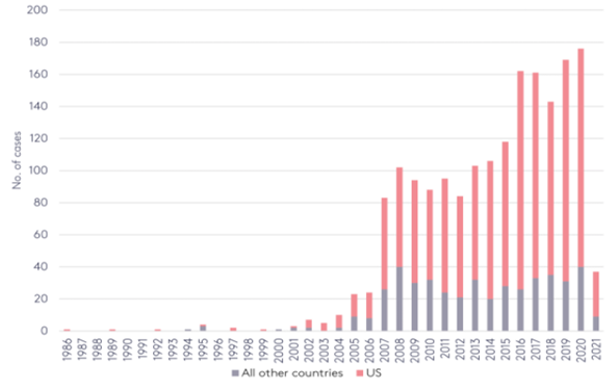
Figure 5.1 Increase in Climate Litigation from 1986-2021
Administrative Cases: Several administrative cases have been successful in holding governments accountable for climate action, particularly Massachusetts v. EPA, the Nigerian case against Shell, Leghari v Republic of Pakistan, and the Urgenda case in the Netherlands. Ongoing Administrative Cases include Juliana v. United States which is significant as it seeks to establish a constitutional right to a stable climate.
Tortious Cases: While many early tortious cases have been unsuccessful, there is a “second wave” of cases with renewed zeal and strategic legal approaches. Lliuya v. RWE represents a key ongoing case. (Brook,2019).
Investor Claims: The York County v. Rambo case (pending), where bond investors accused the Pacific Gas and Electric Company of failing to disclose the risk of its non-compliance with electrical line maintenance standards and it’s consequent contribution to increasing wildfires in the region
Given the successful outcomes of climate liability cases in other jurisdictions, the city of Huntington is at significant risk of facing similar legal challenges. The likelihood and severity of these risks vary by case type. Administrative cases pose the highest risk, with both a high likelihood of occurrence and severe consequences for the city. Tortious claims, while slightly less common, carry a medium likelihood and severity, particularly if the city is perceived as failing to address known climate risks. Investor claims present another critical area of concern, with both a high likelihood and high severity.
Risk Evaluation
This process helps organizations determine where their exposure to climate-related legal action is highest and where to focus mitigation efforts. Based on the risk analysis, it is highly recommended that Huntington prioritizes climate liability risks in alignment with the prevailing trends in climate litigation. The city should focus first on addressing potential administrative actions, such as regulatory compliance issues or failure to meet environmental standards, as these pose the most immediate risk. Next, investor claims should be addressed, particularly those related to inadequate disclosure of climate-related risks or mismanagement of climate impacts. Finally, tortious claims, including lawsuits for negligence or harm caused by climate-related events, should be considered, as these, while less immediate, could result in significant financial and reputational damage over time.
Risk Treatment
- Adopt Sustainable Practices to Reduce GHG Emissions: Huntington should reduce greenhouse gas emissions by transitioning to renewable energy, improving energy efficiency in public infrastructure, and investing in carbon capture technologies. Promoting green public transportation, reducing waste, and encouraging businesses to adopt eco-friendly practices can further lower the city’s carbon footprint.
- Adapt to the Impacts of Climate Change: To address climate change risks, Huntington should invest in adaptive infrastructure, such as sea walls, drought-resistant agricultural practices, and upgraded drainage systems, reducing the likelihood of administrative cases and safeguarding communities and businesses from potential liabilities.
- Conduct Continuous Legal and Compliance Reviews: Regular legal reviews are necessary to stay updated on emerging duties of care established in climate litigation cases. To achieve this, the city could employ compliance officers who monitor daily operations to ensure they align with climate change agreements and regulations. This approach helps the city and associated organizations avoid administrative actions by showcasing a strong commitment to environmental responsibility.
- Improve Insurance and Financial Strategies: The city and its businesses should review their insurance policies to ensure they adequately cover potential climate-related liabilities. To do this, Huntington must explore other forms of conventional insurances like climate insurance, Directors and Office Insurance, Professional Indemnity Insurance and Product Liability Insurance. Financial strategies should include setting aside funds to manage legal expenses, adaptation measures, and climate influenced infrastructure upgraded, therefore reducing the financial burden of litigation and adaptation efforts.
- Enhance Disclosure and Transparency: Huntington should prioritize clear communication about climate risks to investors, businesses, and the public by hiring professionals such as Climate Risk Analysts, Sustainability Officers, Environmental Policy Advisors, or Corporate Social Responsibility (CSR) Managers. Specifically, roles like Climate Communications Specialists or Environmental Public Affairs Managers would be instrumental in crafting and delivering messages about climate risks to stakeholders. These experts can identify and assess climate liability risks effectively, ensuring transparent reporting on climate-related financial risks and their potential impact on operations. Additionally, open and proactive communication fosters trust among stakeholders, helping to mitigate reputational harm associated with climate litigation.
- Advocacy and Lobbying: The city should actively engage with federal and state governments, as well as other stakeholders, to advocate for reasonable and practical climate policies. This way Huntington can shape policies that support both mitigation and adaptation strategies. Furthermore, the city should monitor the trickle-down effects of administrative cases in other jurisdictions to anticipate potential regulatory changes that could impact its operations.
- Engage Stakeholders: Huntington should collaborate with vulnerable communities ensuring equitable access to climate adaptation resources. This includes involving residents in discussions about climate risks while soliciting their input in decision-making and providing educational resources to empower them to contribute to climate solutions. Appointing Community Engagement Coordinators or Climate Outreach Specialists in different communities within the city as points of contact between the government and residents can facilitate this process.