Introduction & Methodology
Introduction
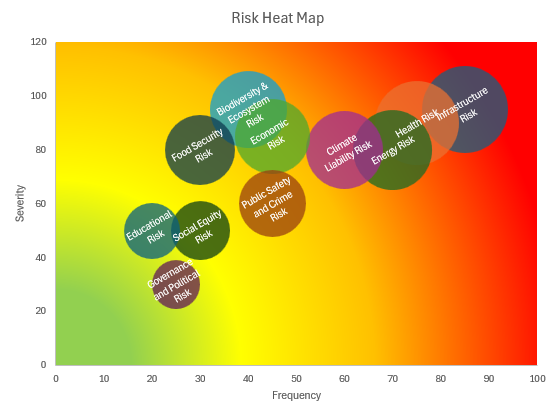
Huntington, West Virginia, situated at the confluence of the Ohio and Guyandotte rivers has a rich history as a transportation and industrial hub that has long shaped its economic and cultural identity. However, this foundation also present vulnerabilities in the face of climate change. The city faces an evolving set of challenges tied to its geographic location and climate. Climate change has introduced a suite of acute and chronic risks that threaten the city’s health, infrastructure, and economic viability. Through our analysis, we identified five top risks affecting Huntington: Infrastructure Risk, Health Risk, Energy Risk, Biodiversity & Ecosystem Risk, and Climate Liability Risk. These risks pose immediate and long-term threats, from rising temperatures that exacerbate heat-related illnesses and strain energy systems to flooding that endangers nearly 28% of properties and disrupts critical infrastructure. Biodiversity degradation weakens natural resilience against environmental changes, while potential legal liabilities arising from inadequate climate action present financial and reputational risks for the city. This report, guided by the ISO 31000 risk management framework, evaluates these risks through an in-depth analysis of Huntington’s unique challenges and presents actionable strategies for mitigation. By addressing these interconnected risks and implementing the recommendations outlined in this report Huntington can enhance its resilience from the intensifying impacts of climate change, safeguard its residents, and preserve its role as a thriving Appalachian city.
Methodology
To determine the key risks for the City of Huntington, a comprehensive list of potential risks was compiled, and each was assigned a frequency and severity score. These scores were initially derived using a structured preliminary ranking system. Subsequently, the scores were refined using historical data specific to Huntington, including observed trends in temperature increases, rainfall patterns, and flood occurrences, while ensuring alignment with established global climate trends. An overall risk score was then calculated for each risk using the formula Risk Score = (Frequency Weight × Frequency) + (Severity Weight × Severity). The weights assigned to frequency and severity were 40% and 60% respectively. The motivation for this rating was a balance between longevity and current risks. The top five risks with the highest risk scores were selected for further investigation. Each of the identified risks was then evaluated using the ISO 31000 risk management framework. The ISO 31000 standard provides guidelines for managing risk. Applying the ISO 31000 framework helps ensure that the risk management process is systematic and comprehensive and that it is customized to the specific context of the City of Huntington.